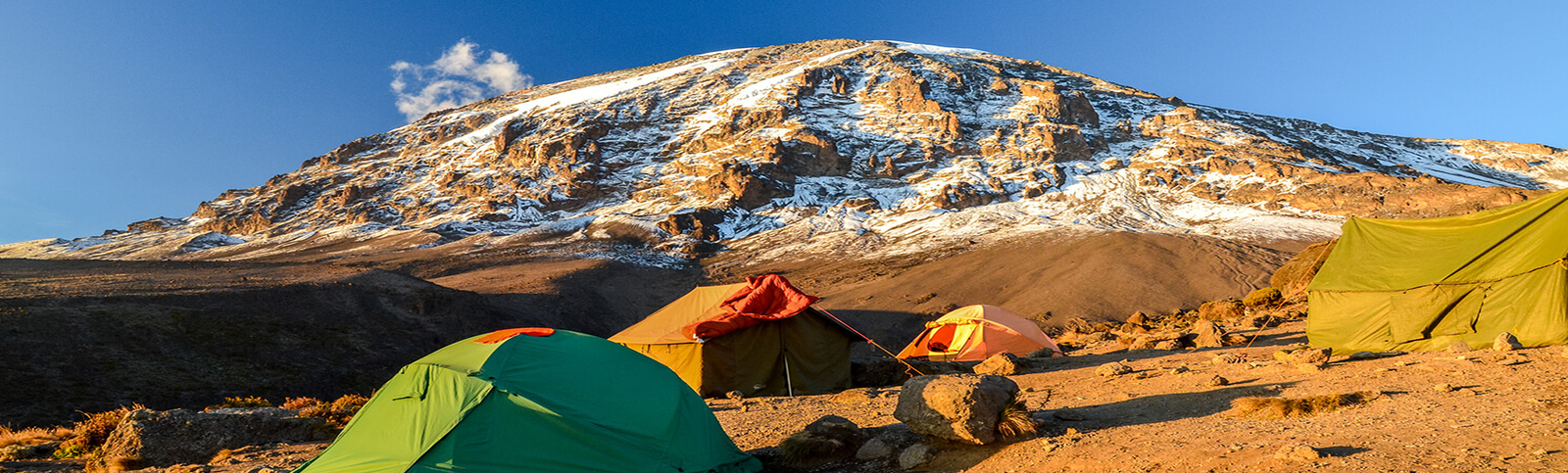
Climbing Mount Kilimanjaro is one of the greatest adventures in the world — and the Marangu Route remains one of the most iconic ways to reach the summit. Known as the “Coca-Cola Route,” Marangu is the oldest and most established Kilimanjaro trail. It is the only route that offers hut accommodations with bunk beds, solar lighting, and simple dining facilities, making it a favorite among climbers who prefer more comfort during their trek.
At Everyday Safaris, we recommend the 6-day Marangu Route program because it gives climbers a much better chance of success compared to the shorter 5-day version. The additional day at Horombo Hut allows for rest and acclimatization, which is key to adapting to the altitude and improving your chances of standing on Uhuru Peak (5,895 m / 19,341 ft) — the highest point in Africa and the world’s tallest free-standing mountain.
The Marangu Route begins at the Marangu Gate (1,860 m), located on the southeastern side of Kilimanjaro, just a short drive from Moshi or Arusha. The trail takes you through five distinct ecological zones:
This diversity of scenery makes the Marangu Route incredibly rewarding — every day feels different, offering a new perspective of the mountain.
What makes Marangu unique is its accommodation style. Instead of sleeping in tents, climbers stay in shared mountain huts:
These huts are equipped with bunk beds, mattresses, and solar lights. Meals are served in communal dining halls, creating a lively atmosphere where climbers from around the world come together to share stories and experiences. For climbers who are not comfortable camping or who prefer a more structured environment, Marangu is the ideal choice.
Many operators advertise the Marangu Route as a 5-day climb, but this often results in lower summit success rates due to insufficient acclimatization. At Everyday Safaris, we prioritize your safety and success. That’s why we recommend and operate the 6-day itinerary, which includes an extra acclimatization day at Horombo Hut. This day makes a huge difference, giving your body time to adjust to the altitude and significantly increasing your chances of reaching Uhuru Peak.
The Marangu Route is considered a moderate climb, making it suitable for first-time trekkers and those looking for a shorter Kilimanjaro program. It’s a great option for:
However, while it is less physically demanding than routes like Machame or Umbwe, it should not be underestimated. The altitude is the biggest challenge, which is why the 6-day program is essential.
Choosing Everyday Safaris means climbing with a team that knows Kilimanjaro intimately. Our family has been welcoming climbers to Marangu for decades, beginning with our base atBabylon Lodge, and today we continue that legacy with a dedicated Kilimanjaro team. As proud partners of KPAP (Kilimanjaro Porters Assistance Project) and members of TATO (Tanzania Association of Tour Operators), we ensure every climb is ethical, professional, and safe.
With our expert guides, well-trained crew, and commitment to personalized service, we make sure your Marangu Route climb is more than just a trek — it’s a life-changing experience.
Upon arrival at Kilimanjaro International Airport (JRO), you will be met by our representative and transferred to Babylon Lodge in Marangu. Nestled at the foot of Kilimanjaro, Babylon Lodge is the perfect base to rest and acclimatize before your climb. Dinner and overnight on a half-board basis (HB).
Distance: ~8 km |
Hiking time: 4–5 hours
Habitat: Rainforest
After breakfast at Babylon Lodge, transfer to Marangu Gate for registration. Your hike begins through lush rainforest, home to Colobus monkeys, blue monkeys, and exotic birdlife. After a steady trek, you’ll arrive at Mandara Hut, where you’ll stay overnight. Optional short hike to Maundi Crater for views over Kenya.
Overnight at Mandara Hut (FB).
Hiking time: 6 hours
Distance about 12km
Habitat: Moorland
After breakfast, hike to the Horombo Huts at 12,000 feet. The trail from Mandara Hut passes through a short stretch of forest, then skirts the base of Maundi Crater, transitioning from rainforest to moorland. A brief detour up the Maundi Crater rim offers an impressive view of Kibo Crater, which glimmers with majestic glaciers on a clear day. In the open moorland, you can see Kilimanjaro’s spectacular plants, including the endemic giant lobelia, which reaches 3 m tall, and the giant groundsel (Senecio Kilimanjari), which can grow up to 6 m! After about six hours, you will arrive at the Horombo Hut, where hot washing water, rest, an evening meal, and an overnight stay await you.
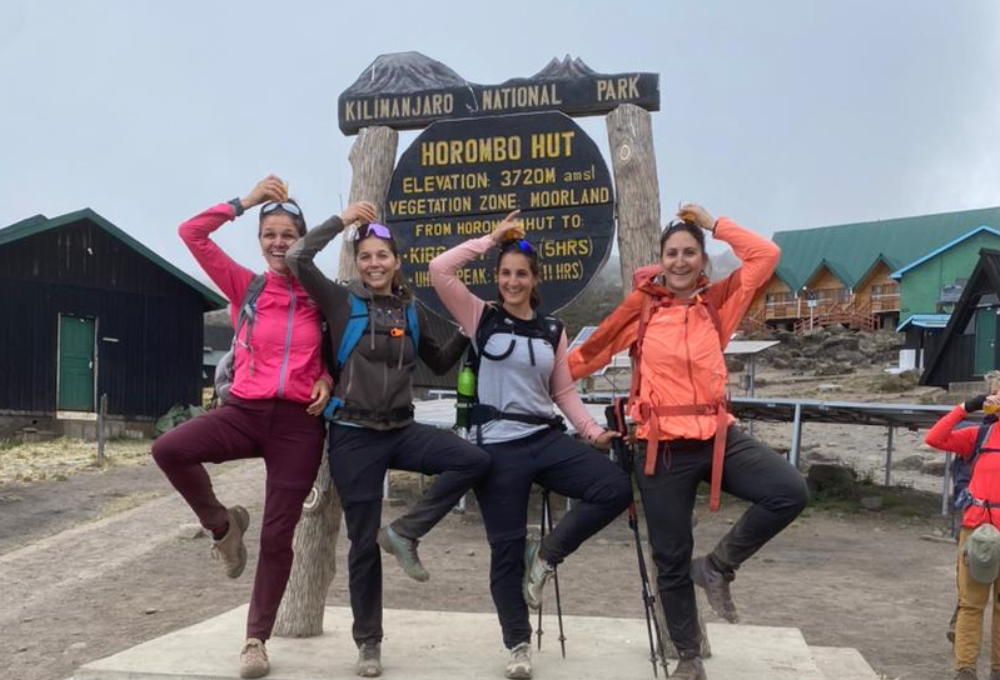
For a six day Climb you will spend an extra day at Horombo Huts at 12,000 feet. The huts form a lively village on a plateau and are frequented by hikers, guides, and porters, creating an adventurous atmosphere. You’ll encounter hikers both ascending and descending.
This extra day allows for better acclimatization, with a recommended hike toward Mawenzi-Saddle, passing Zebra Rocks (3 hours up, 1.5 hours down). This hike aids acclimatization. Remember to drink enough water and proceed slowly! All meals are provided at the hut. Retire early for a good night’s rest.
Hiking time: 6 hours
Distance about 10km
Habitat: Alpine Desert
Start your day with a lovely breakfast, and if you rise a bit earlier, you’ll have the chance to capture some stunning sunrise photos! From Horombo, you have the option of two trails leading to the “Saddle,” the beautiful area nestled between the peaks of Mawenzi and Kibo. You can choose the upper route (to the right) or the lower route (to the left). We highly recommend the lower route, as it’s much easier and will take nearly an hour to complete. Plus, it leads you past the last watering point at 4130m. And don’t forget to take your time and stay hydrated!
Situated in the barren Alpine desert is Kibo hut, a stone-built block house, and a few wooded houses. The latter have bunk beds, but there are no nearby streams.
The summit is now 1195 m higher, and you will make your final ascent the same night. Prepare your equipment, ski stick, and thermal clothing for your summit bid. This should include replacing your headlamp and camera batteries and making sure you have a spare set available as well. It will be wise to carry your water in a thermal flask to prevent freezing. Go to bed between 18h00 and 19h00 and get as much sleep as possible.
Hiking time: 7-8 hours to Uhuru Peak- 4 hours to descend to Horombo/
Distance: 6km ascend and 9km descending.
Habitat: Stone Scree and Ice-capped summit
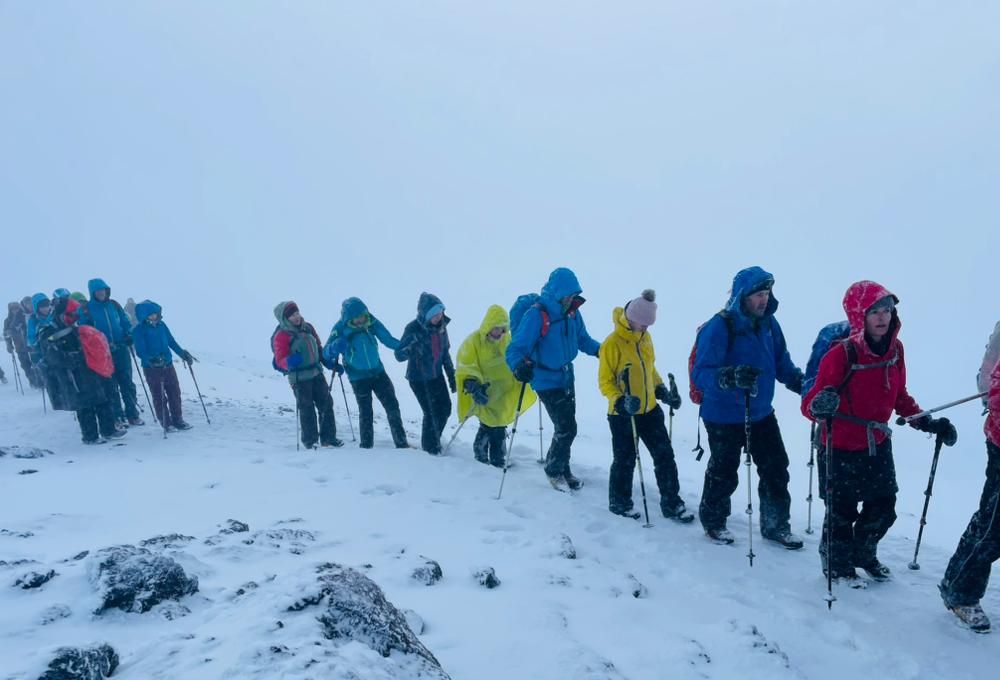
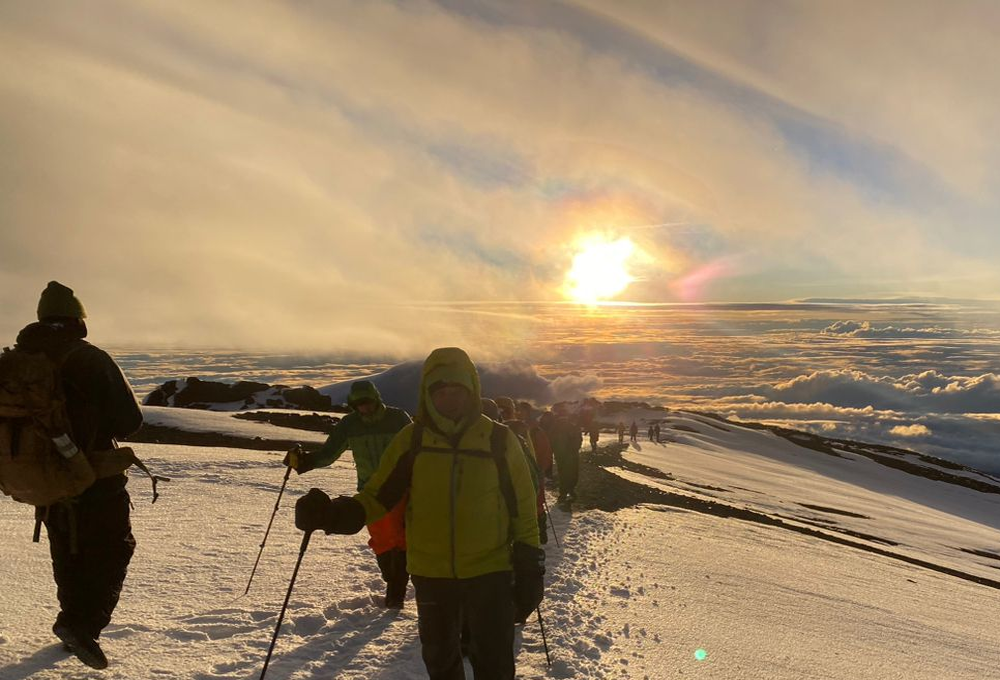
You will rise around midnight, and after having some tea and biscuits, you will shuffle off into the night. This is where it gets tough. The first section of the trail consists of a rocky path to Hans Meyer Cave (5150m). The route zigzags to Gillman’s Point (5681m) on the crater rim.
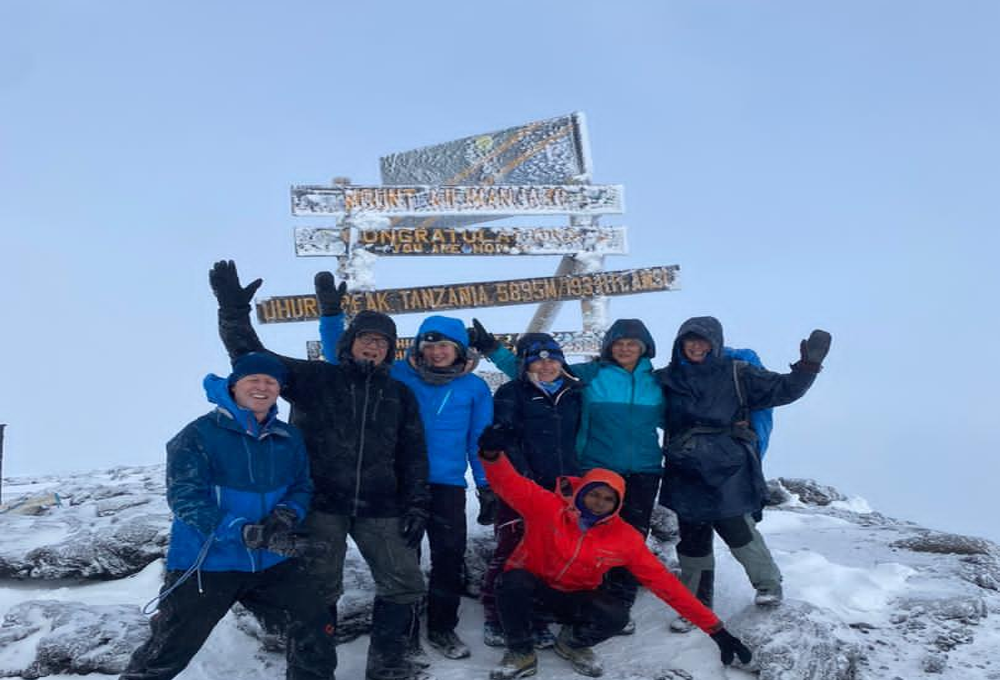
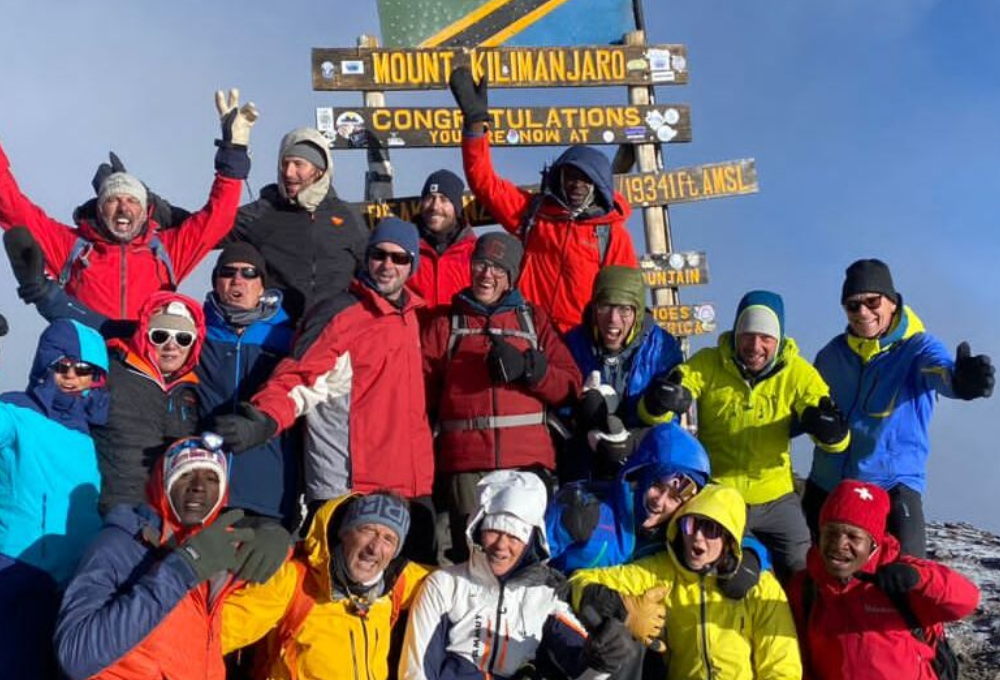
From Gillman’s Point, you will typically encounter snow up to Uhuru Peak (5,895 m), the highest point in Africa. Total exhilaration and satisfaction—you made it! Weather conditions on the summit will determine how long you can spend taking photographs before the three-hour descent back to Kibo Hut. You will rest before picking up the remaining items and heading to Horombo Hut. Dinner and accommodation will be at Horombo Hut.
Descend from Horombo (3720m) to the Marangu Gate (1920m)
Hiking time 5-6 hours/ Distance: About 18 km
After breakfast, you descend for 6 hours, passing the Mandara Hut and heading to the Marangu Gate. At Marangu Gate, you sign your name and details in a register. This is also where successful climbers receive their summit certificates. Climbers who reach Gillman’s Point (5,685 m) are issued green certificates, while those who reach Uhuru Peak (5,895 m) receive gold certificates. You will have a short celebration at the Kilimanjaro National Park Gate before bidding farewell to your guides and porter. Here is where you can give your crew any tips that you might have and also if you would like to donate some of your gear. A vehicle will meet you at Marangu Gate and drive you back to Babylon Lodge in Marangu. At Babylon Lodge, you will have hot water showers, and then it will be time to celebrate your achievement.
Transfer to Kilimanjaro International Airport (JRO) for your departure flight or continue with an optional safari or Zanzibar beach extension.
Go forth and explore your inner connection with the wonders of wildlife.
Fill out the form below and we will get in touch with you