Climbing Mount Kilimanjaro is a powerful and rewarding experience. While it is a non-technical trekking mountain, it reaches high altitude and requires careful planning, professional guidance, and responsible decision-making.
At Everyday Safaris, safety is not treated as an emergency topic or marketing slogan. It is built quietly and consistently into how we design itineraries, train our guides, pace our climbs, and support our clients on the mountain.
This page explains the key health, safety, and medical considerations on Mount Kilimanjaro, and how Everyday Safaris manages them responsibly for individuals, families, charity groups, schools, and international travel partners.
Mount Kilimanjaro rises to 5,895 meters (19,341 feet) above sea level.
The main challenge is altitude, not technical climbing difficulty.
As altitude increases:
For this reason, acclimatization, pacing, and experienced guide monitoring are the foundation of a safe and successful climb.
Acute Mountain Sickness (AMS) occurs when the body struggles to adapt to altitude.
It can affect climbers of any age, fitness level, or experience.
Mild symptoms are common at altitude and do not automatically indicate danger, but they must be monitored and managed responsibly.
In uncommon cases, severe conditions may occur:
These conditions require immediate descent and professional response. Everyday Safaris’ guides are trained to recognize early warning signs and act promptly.
We do not promote rushed itineraries or pressure climbers to move faster than is safe.
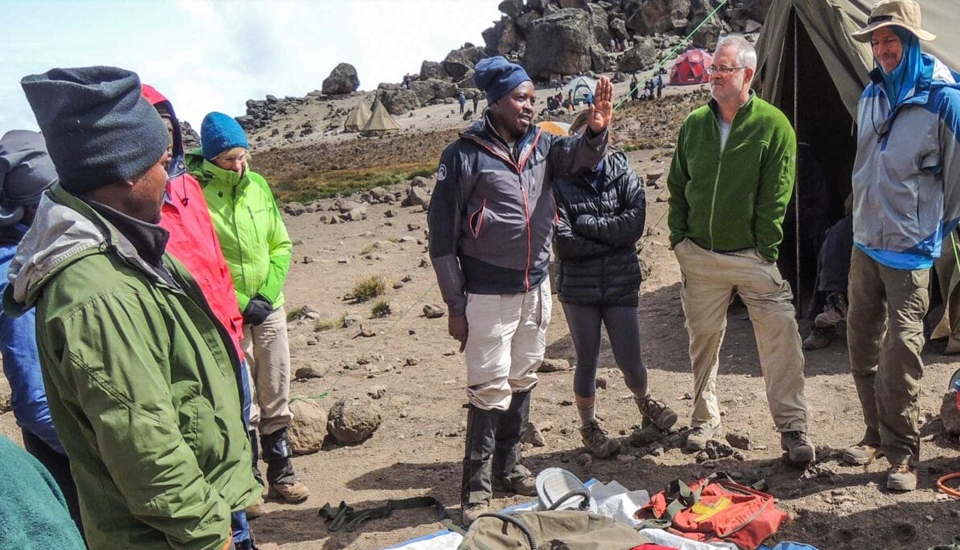
Our experienced mountain guides monitor climbers daily throughout the trek, including:
Rather than over-medicalizing the experience, our guides rely on experience, observation, and communication, encouraging climbers to report symptoms early and honestly. This allows potential issues to be identified early without creating anxiety.
Everyday Safaris emphasizes:
Rushing is one of the most common causes of altitude-related problems. A steady pace significantly improves comfort and summit success.
Every Kilimanjaro climb operated by Everyday Safaris includes:
These measures ensure immediate support is available should a climber require assistance.
All Everyday Safaris packages include AMREF Flying Doctors emergency evacuation membership while clients are traveling in Tanzania.
This provides:
AMREF Flying Doctors is one of the most trusted medical evacuation providers in East Africa and adds an important layer of reassurance for our guests and institutional partners.
Evacuation decisions are made by professionally trained, highly experienced mountain guides, based on the climber’s condition, altitude, terrain, and weather.
In rare and serious situations, helicopter evacuation services such as Kili MedAir may be required.
Important clarification:
Our team assists fully with coordination and documentation to support insurance claims.
No. Kilimanjaro is a trekking mountain.
We strongly recommend that climbers:
Kilimanjaro’s weather can change quickly.
Our planning considers:
Clients receive clear packing guidance to stay warm, dry, and protected.
Safety on Kilimanjaro is closely linked to ethical operations.
Everyday Safaris:
Well-supported teams create safer climbs for everyone.
Safety is not about fear.
It is about preparation, professionalism, calm leadership, and respect for the mountain.
Our goal is that every climber:
Everyday Safaris designs climbs around these principles.
Whether you are climbing as an individual, family, charity group, school, or through an international travel agent, Everyday Safaris will guide you responsibly through every step of the journey.
Go forth and explore your inner connection with the wonders of wildlife.
Mount Kilimanjaro is considered a safe trekking mountain when climbed responsibly with proper acclimatization, experienced guides, and realistic pacing. The primary risk is altitude, which is effectively managed through good itinerary design and daily guide monitoring.
The main health risk is altitude-related illness, including Acute Mountain Sickness (AMS). This is why acclimatization, slow pacing, and early communication are essential.
Our guides monitor climbers daily throughout the trek, including morning and evening check-ins, trail observation, and open communication. Climbers are encouraged to report symptoms early so they can be managed calmly and effectively.
Yes. Emergency oxygen is available on all Kilimanjaro climbs operated by Everyday Safaris and may be used if a climber requires additional support
Yes. A fully stocked first-aid kit is carried by the lead guide on every Kilimanjaro climb.
In most cases, descending to a lower altitude leads to rapid improvement. If needed, emergency oxygen may be used, and evacuation is coordinated through Kilimanjaro National Park rescue services.
Yes. All Everyday Safaris packages include AMREF Flying Doctors emergency evacuation membership while clients are in Tanzania. This provides access to fixed-wing air evacuation services in remote areas.
No. Helicopter evacuation, if required, is not included in standard trip costs. The client pays directly and may claim the cost from personal travel insurance. Everyday Safaris assists with coordination and documentation.
Yes. We strongly recommend comprehensive travel insurance covering high-altitude trekking, medical treatment, and evacuation.
Yes. We operate in line with KPAP / IMEC Partner for Responsible Trekking standards, ensuring fair porter treatment and responsible operations — which also contributes to safer climbs.
Yes. Many climbers are first-time trekkers. With proper preparation, realistic expectations, and professional guidance, Kilimanjaro is achievable for people with good general fitness.
Fill out the form below and we will get in touch with you