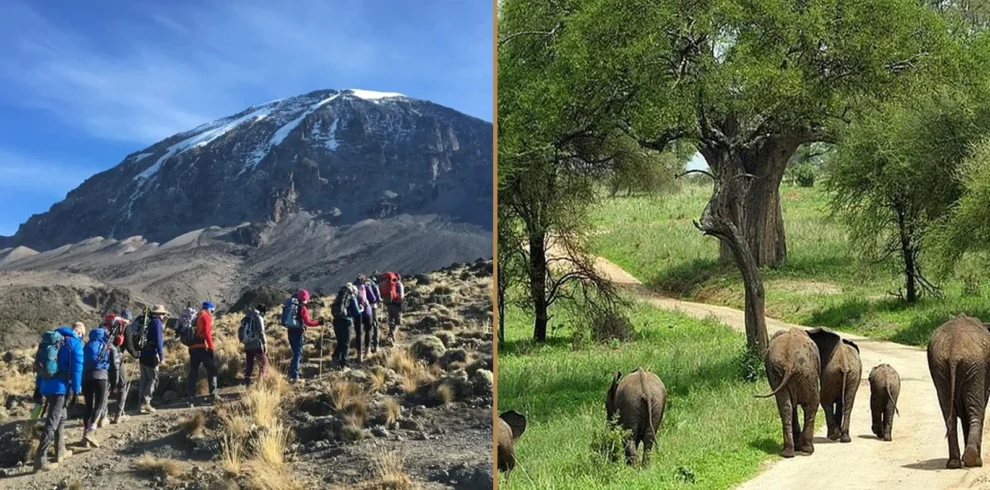
5-Day Kilimanjaro Marangu Route Group Summit Climb is a professionally guided Kilimanjaro experience operated by Everyday Safaris from Arusha, Tanzania. The trip follows the Marangu Route with route-specific planning, local guides, mountain support and safety-focused pacing.
Kilimanjaro’s hut-based route, approaching from the southeast through rainforest, moorland and alpine desert toward Kibo. This departure is positioned as a group climb, allowing travelers to share the mountain experience while following the guide team’s common pace and safety plan.
The objective is Uhuru Peak at 5,895 m, but summit success is never guaranteed. Weather, altitude response and the lead guide’s safety decisions always take priority. Everyday Safaris prepares a tailored quotation based on travel dates, group size, route logistics and any private, safari or Zanzibar additions.
5-Day Kilimanjaro Marangu Route Group Summit Climb at a Glance
- Duration: 5 days / 4 nights
- Route: Marangu Route
- Start and finish: Arusha, Tanzania
- Guiding: Professional local Kilimanjaro guides
- Best for: fit travelers seeking a compressed Kilimanjaro summit itinerary and who understand that shorter schedules provide less acclimatization time
- Pricing: Tailored quotation on request
Why Choose the Marangu Route?
Kilimanjaro’s hut-based route, approaching from the southeast through rainforest, moorland and alpine desert toward Kibo.
Plan carefully using our Kilimanjaro climbing guide, Marangu Route information, Kilimanjaro preparation guide, Kilimanjaro packing list and Kilimanjaro safety standards.
Trip Highlights
- Route-specific Kilimanjaro trekking on the Marangu Route
- Professional local guide support and mountain logistics
- Distinct rainforest, moorland, volcanic and high-altitude scenery where included
- Safety-focused pacing and health monitoring on overnight climbs
- Easy connection with Tanzania safari or Zanzibar extensions
Acclimatization and Safety
Altitude affects travelers differently regardless of fitness. Shorter itineraries give the body less time to adapt, so Everyday Safaris guides monitor condition closely and can adjust pace, timing or turnaround decisions when required. On summit climbs, emergency oxygen and first-aid equipment form part of the mountain safety setup.
Travelers should carry suitable travel insurance covering the planned trekking altitude, medical treatment and emergency evacuation. Good preparation includes realistic fitness, suitable footwear, warm layers, waterproof protection, hydration and willingness to follow guide instructions.
Who Is This Trip Best For?
This trip is best suited to fit travelers seeking a compressed Kilimanjaro summit itinerary and who understand that shorter schedules provide less acclimatization time. Travelers with significant medical conditions, recent injuries or previous altitude problems should seek medical advice before booking.
Private, Group and Tailor-Made Options
Compare private Kilimanjaro climbs and group Kilimanjaro climbs to choose the style that suits your plans.
Extend Your Tanzania Journey
Add a Kilimanjaro and Tanzania safari or a Kilimanjaro and Zanzibar holiday after the mountain.
Frequently Asked Questions
Is this a summit itinerary?
Yes. It is built around a summit attempt on Uhuru Peak, subject to weather, acclimatization and guide safety decisions.
Is a shorter Kilimanjaro itinerary harder?
Shorter schedules can feel harder because the body has less time to acclimatize. Fitness helps with hiking effort but does not guarantee good altitude adaptation.
Is there a fixed public price?
No fixed price is included. Everyday Safaris prepares a custom quotation based on dates, group size, route logistics and service level.
Can the guide stop a summit attempt?
Yes. The lead guide can change pace, timing or turnaround plans whenever weather or a climber’s condition creates a safety concern.
Request a Kilimanjaro Quote
Contact Everyday Safaris with your preferred travel dates, number of travelers and route choice for availability and a tailored quotation.
Register at Marangu Gate and climb through rainforest to Mandara Hut. The group begins at a controlled pace while guides monitor hydration and general condition. The trail begins beneath a dense montane forest canopy, with roots and wet ground making a steady rhythm more useful than speed. Guides use the first day to establish the team’s walking pace and monitor hydration, appetite and general condition before higher altitude becomes a factor. Mandara Hut is reached in the upper forest zone at roughly 2,700 m. After arrival there is time to settle in, change into dry layers, eat and rest, with a short nearby walk possible if the guide considers it useful.
Continue through heath and moorland toward Horombo Hut with increasingly open views toward Mawenzi and Kibo. Leaving the forest, the route enters heath and moorland where the vegetation becomes lower and views begin to open toward Mawenzi and Kibo. The increase in altitude is much more noticeable than on the first day, so the guide controls the pace and encourages frequent drinking. Horombo lies at roughly 3,700 m and is an important acclimatization point on the Marangu Route. On arrival the priority is food, warm clothing, hydration and rest while the guide checks how each climber is responding to thinner air.
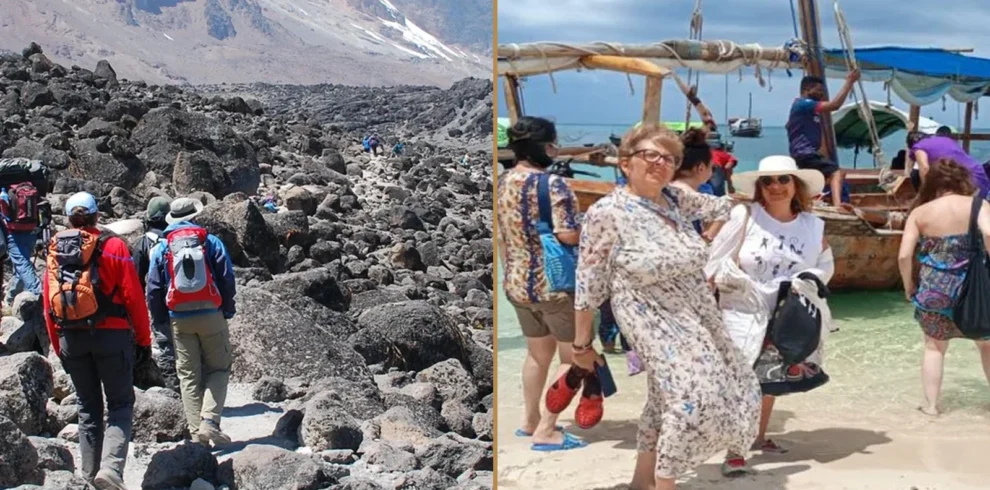
Cross the alpine Saddle between Mawenzi and Kibo to Kibo Hut. Rest, eat early and prepare equipment for the overnight summit attempt. The route leaves substantial vegetation behind and crosses the broad alpine Saddle between Mawenzi and Kibo. The landscape becomes stark, dry and exposed, with wind and temperature changes more noticeable than on previous days. Kibo Hut sits at roughly 4,700 m, so the final approach is deliberately slow. After reaching the hut, climbers eat early, prepare summit layers, headlamps, water and snacks, and rest. The lead guide carries out a final health assessment and summit briefing before the overnight ascent.
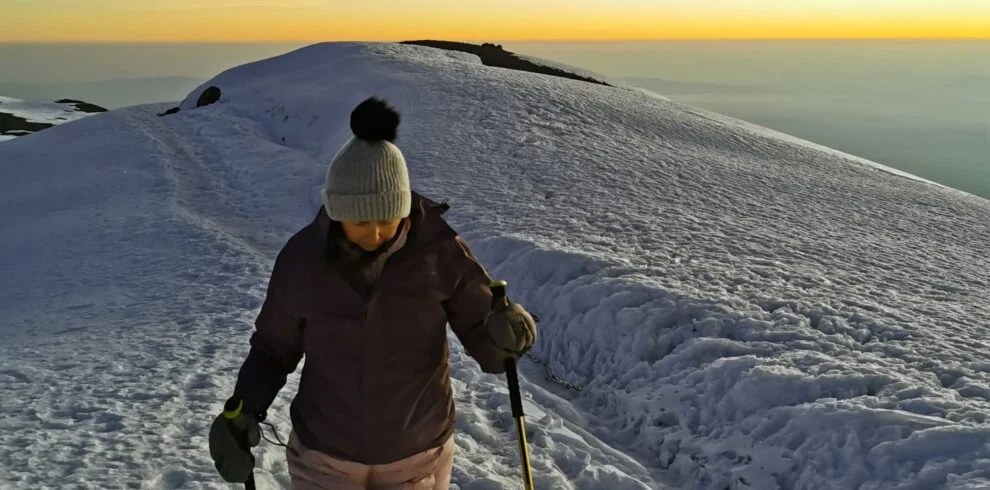
Begin the summit climb at night, moving slowly toward Gilman’s Point and onward to Uhuru Peak at 5,895 m when conditions and group health allow. Descend via Kibo to Horombo Hut. The summit push normally starts at night from Kibo Hut, climbing steep volcanic scree toward Gilman’s Point on the crater rim. Climbers who are strong enough and responding well to altitude continue around the rim toward Uhuru Peak at 5,895 m. Cold, wind, darkness and very low oxygen make this the hardest section of the route. Summit time is kept brief, and the lead guide can turn a climber around at any point. The descent then drops substantially lower, which usually brings noticeable relief from the extreme altitude.
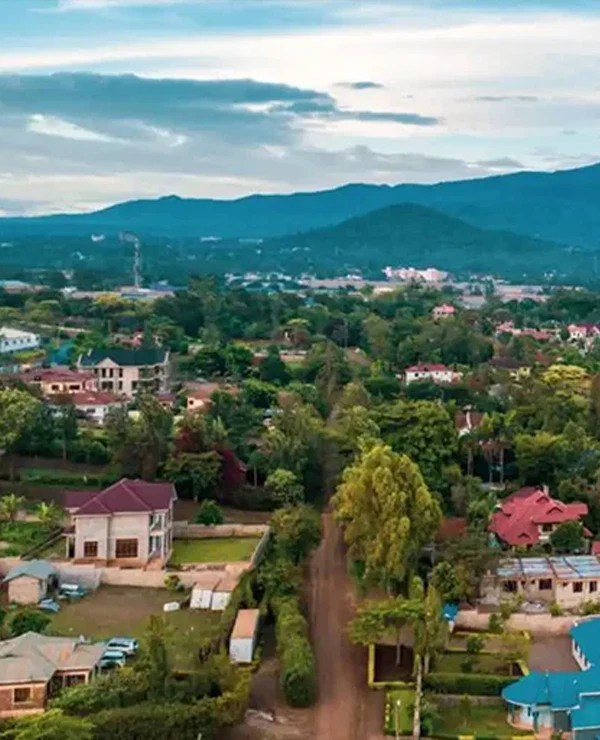
Descend through moorland and rainforest to Marangu Gate, complete park formalities and transfer back to Arusha. The final day is a long descent through moorland and back into humid montane forest. Although altitude pressure decreases quickly, tired legs and potentially slippery ground mean the descent still requires care. The team passes the Mandara area before continuing to Marangu Gate for park exit formalities. At the gate there is time to meet the support team and change into travel footwear before the road transfer back to Arusha.