4-Day Kilimanjaro Shira Plateau and Lava Tower Trek is a professionally guided Kilimanjaro experience operated by Everyday Safaris from Arusha, Tanzania. The trip follows the Shira Route with route-specific planning, local guides, mountain support and safety-focused pacing.
A western high-altitude approach across the Shira Plateau. Because the route begins high, careful pacing and acclimatization awareness are especially important.
This is deliberately a non-summit Kilimanjaro trek. It gives travelers real mountain experience without presenting a short itinerary as an Uhuru Peak climb. Everyday Safaris prepares a tailored quotation based on travel dates, group size, route logistics and any private, safari or Zanzibar additions.
4-Day Kilimanjaro Shira Plateau and Lava Tower Trek at a Glance
- Duration: 4 days / 3 nights
- Route: Shira Route
- Start and finish: Arusha, Tanzania
- Guiding: Professional local Kilimanjaro guides
- Best for: travelers who want a shorter guided Kilimanjaro experience without committing to a full summit expedition
- Pricing: Tailored quotation on request
Why Choose the Shira Route?
A western high-altitude approach across the Shira Plateau. Because the route begins high, careful pacing and acclimatization awareness are especially important.
Plan carefully using our Kilimanjaro climbing guide, Shira Route information, Kilimanjaro preparation guide, Kilimanjaro packing list and Kilimanjaro safety standards.
Trip Highlights
- Route-specific Kilimanjaro trekking on the Shira Route
- Professional local guide support and mountain logistics
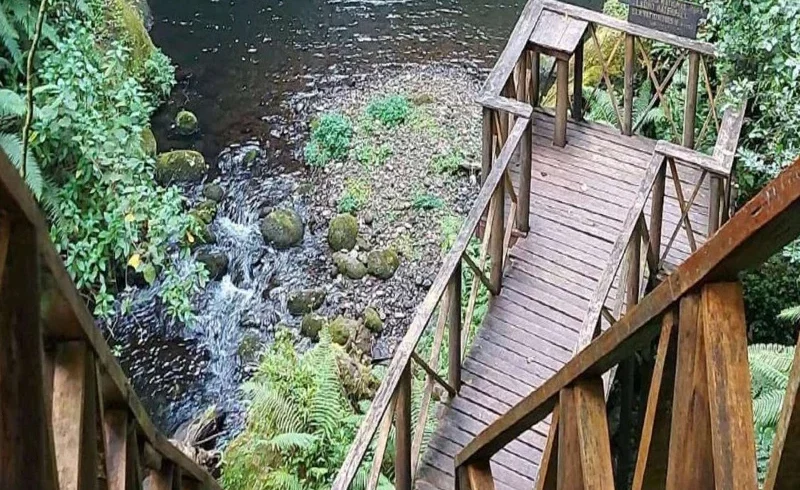
- Distinct rainforest, moorland, volcanic and high-altitude scenery where included
- Safety-focused pacing and health monitoring on overnight climbs
- Easy connection with Tanzania safari or Zanzibar extensions
Acclimatization and Safety
Altitude affects travelers differently regardless of fitness. Shorter itineraries give the body less time to adapt, so Everyday Safaris guides monitor condition closely and can adjust pace, timing or turnaround decisions when required. On summit climbs, emergency oxygen and first-aid equipment form part of the mountain safety setup.
Travelers should carry suitable travel insurance covering the planned trekking altitude, medical treatment and emergency evacuation. Good preparation includes realistic fitness, suitable footwear, warm layers, waterproof protection, hydration and willingness to follow guide instructions.
Who Is This Trip Best For?
This trip is best suited to travelers who want a shorter guided Kilimanjaro experience without committing to a full summit expedition. Travelers with significant medical conditions, recent injuries or previous altitude problems should seek medical advice before booking.
Private, Group and Tailor-Made Options
Compare private Kilimanjaro climbs and group Kilimanjaro climbs to choose the style that suits your plans.
Extend Your Tanzania Journey
Add a Kilimanjaro and Tanzania safari or a Kilimanjaro and Zanzibar holiday after the mountain.
Frequently Asked Questions
Is this a summit itinerary?
No. This is intentionally a short trekking experience below the summit.
Is a shorter Kilimanjaro itinerary harder?
Shorter schedules can feel harder because the body has less time to acclimatize. Fitness helps with hiking effort but does not guarantee good altitude adaptation.
Is there a fixed public price?
No fixed price is included. Everyday Safaris prepares a custom quotation based on dates, group size, route logistics and service level.
Can the guide stop a summit attempt?
Yes. The lead guide can change pace, timing or turnaround plans whenever weather or a climber’s condition creates a safety concern.
Request a Kilimanjaro Quote
Contact Everyday Safaris with your preferred travel dates, number of travelers and route choice for availability and a tailored quotation.
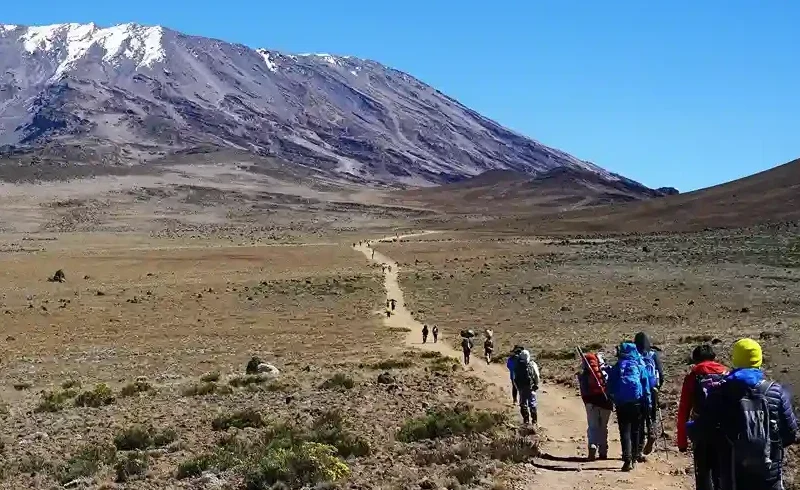
Drive to Kilimanjaro’s western high-altitude access and begin a conservative trek across the Shira Plateau to Shira 1 Camp. The Shira approach begins unusually high on Kilimanjaro’s western side, so climbers enter the plateau environment much faster than on forest-starting routes. The open terrain offers broad volcanic scenery and views toward Kibo when weather is clear, but the altitude requires immediate discipline. Guides keep the pace deliberately slow, encourage frequent drinking and watch for headache or unusual fatigue from the first hours. At the selected Shira camp, warm layers, food, rest and careful acclimatization monitoring become the priorities.
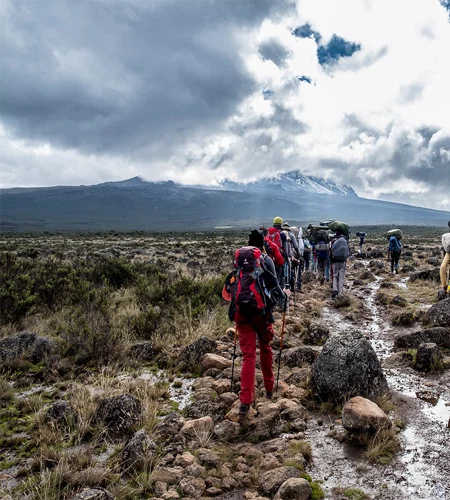
Continue across the plateau at a measured pace, allowing time for rest, hydration and acclimatization while enjoying open volcanic landscapes. The team moves gradually across the broad Shira Plateau, using the day as much for acclimatization as for distance. Open volcanic terrain gives wide views of Kibo and the remains of the ancient Shira caldera when weather allows. The gentler profile is useful for reinforcing the slow walking rhythm needed higher on the mountain. If the itinerary includes an acclimatization extension, the guide may lead a controlled walk to a slightly higher point before returning to sleep lower. The evening is spent eating, hydrating and preparing for the next stage.
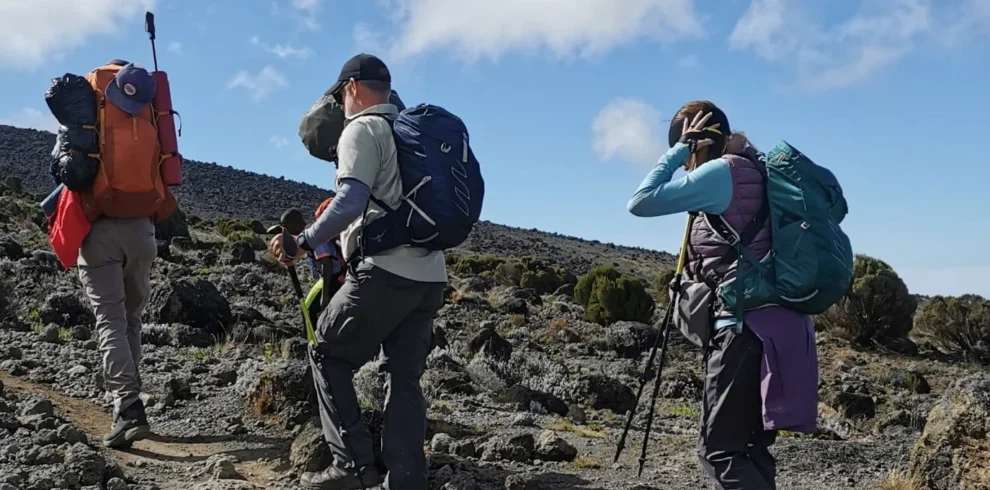
Climb toward Lava Tower at roughly 4,600 m for controlled high-altitude exposure, then descend to sleep lower on the Shira side. The guide determines the turnaround point according to weather and the group’s condition. This is an important acclimatization stage. The route climbs toward Lava Tower at roughly 4,600 m, giving the body useful exposure to higher altitude before descending again. The guide keeps the pace deliberate and monitors headache, appetite, breathing and energy as the group gains height. Time at the high point is adjusted according to weather and individual condition. Descending to a lower sleeping area supports the climb-high, sleep-lower strategy and usually makes the evening feel more comfortable than the high point of the day.
Complete the trek across the plateau toward the vehicle access point and return to Arusha. This itinerary is a high-altitude trek, not a Kilimanjaro summit climb. The final stage turns away from the higher mountain and descends across the Shira landscape toward the agreed trail or vehicle exit. Breathing becomes progressively easier as altitude falls, but loose volcanic ground and tired legs still require controlled footing. The guide sets the pace so the group reaches the exit with ample daylight and completes park formalities without rushing. This descent reinforces that the itinerary is a short high-altitude trek rather than a summit program before the transfer back to Arusha.