9-Day Kilimanjaro Lemosho Route Extended Acclimatization Climb is a professionally guided Kilimanjaro experience operated by Everyday Safaris from Arusha, Tanzania. The itinerary follows the Lemosho Route and is designed around realistic pacing, route-specific logistics, experienced local guides and responsible mountain support.
A scenic western approach that begins through rainforest, crosses the broad Shira Plateau and joins the southern circuit beneath Kibo, offering excellent landscape variety and strong acclimatization opportunities. The extended schedule deliberately adds acclimatization time and a slower progression through the high mountain zones.
The objective is Uhuru Peak at 5,895 m, but summit success is never guaranteed and guide safety decisions take priority. Everyday Safaris prepares a tailored quotation based on dates, group size, route logistics and any private, safari or Zanzibar additions.
9-Day Kilimanjaro Lemosho Route Extended Acclimatization Climb at a Glance
- Duration: 9 days
- Route: Lemosho Route
- Highest objective: Uhuru Peak, 5,895 m
- Start and finish: Arusha, Tanzania
- Guiding: Professional local mountain guides
- Best for: active travelers preparing for a multi-day high-altitude Kilimanjaro climb
- Pricing: Custom quotation on request
Why Choose the Lemosho Route?
A scenic western approach that begins through rainforest, crosses the broad Shira Plateau and joins the southern circuit beneath Kibo, offering excellent landscape variety and strong acclimatization opportunities.
Before booking, review our Kilimanjaro climbing guide, Lemosho Route information, Kilimanjaro preparation guide, Kilimanjaro packing list and Kilimanjaro safety standards.
Trip Highlights
- Guided Kilimanjaro experience on the Lemosho Route
- Distinct rainforest, heath, moorland and high-altitude landscapes where included in the route
- Professional local guides and route-specific mountain logistics
- Responsible porter and support-team coordination on overnight climbs
- Daily pace management and health monitoring on multi-day high-altitude itineraries
- Easy connection with Tanzania safari or Zanzibar extensions after the mountain
Acclimatization and Mountain Safety
Altitude affects travelers differently, regardless of fitness. Everyday Safaris uses conservative guide-led pacing and health monitoring on multi-day climbs. Guides can change pace, rest periods, camp timing or turnaround decisions when weather, trail conditions or a climber’s health requires it. On summit expeditions, emergency oxygen and first-aid equipment form part of the mountain safety setup.
Travelers joining high-altitude itineraries should have suitable insurance covering trekking at the planned elevation, medical treatment and emergency evacuation. Good preparation also includes appropriate footwear, warm layers, waterproof protection, hydration and realistic expectations.
Who Is This Kilimanjaro Trip Best For?
This trip is best suited to active travelers preparing for a multi-day high-altitude Kilimanjaro climb. Fitness requirements rise substantially with duration and altitude. Travelers with significant medical conditions, recent injuries or a history of altitude problems should seek medical advice and discuss their situation with Everyday Safaris before confirming a departure.
Private, Group and Tailor-Made Options
Depending on the itinerary, the trip can be arranged privately or connected with selected group departures. See our private Kilimanjaro climbs and group Kilimanjaro climbs for the main differences.
Combine Kilimanjaro With Safari or Zanzibar
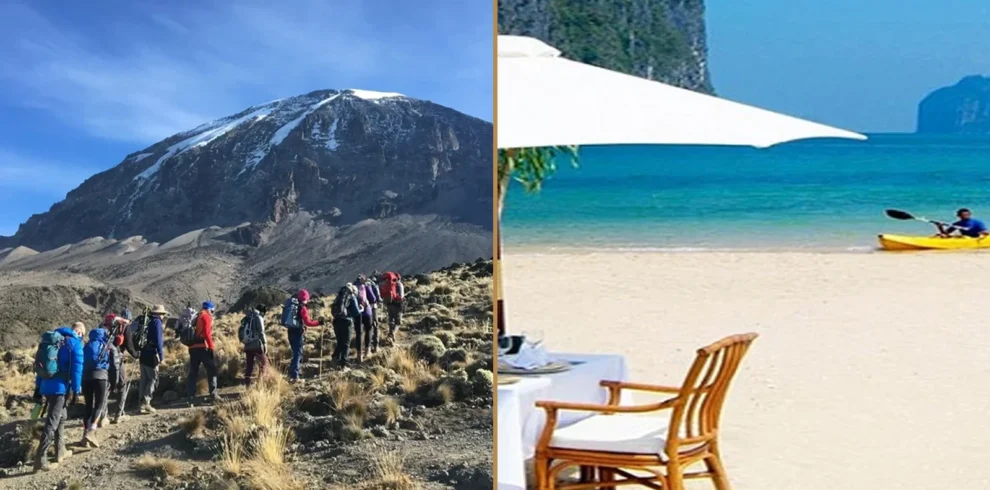
Extend the mountain journey with a Kilimanjaro and Tanzania safari through Serengeti, Ngorongoro, Tarangire or Lake Manyara, or add a Kilimanjaro and Zanzibar holiday after the trek.
Frequently Asked Questions
Is this a summit trip?
Yes. This itinerary is designed around a summit attempt on Uhuru Peak, subject to weather, altitude response and guide safety decisions.
Do I need technical climbing skills?
Standard Kilimanjaro trekking routes do not normally require technical rock-climbing skills. Good fitness, suitable equipment and the ability to hike in changing mountain conditions are still important.
Is there a fixed public price?
No fixed public price is included in this import. Everyday Safaris prepares a tailored quotation based on dates, group size, route logistics, service level and any extensions.
Can the itinerary change?
Yes. Mountain conditions can change quickly. The lead guide may adjust pace, timing, camp decisions or turnaround plans when safety requires it.
When is the best time to climb Kilimanjaro?
Weather patterns vary through the year. Review our best time to climb Kilimanjaro guide when choosing travel dates.
Request a Kilimanjaro Quote
Send Everyday Safaris your preferred dates, number of travelers and route preference. Contact Everyday Safaris for availability and a tailored quotation.
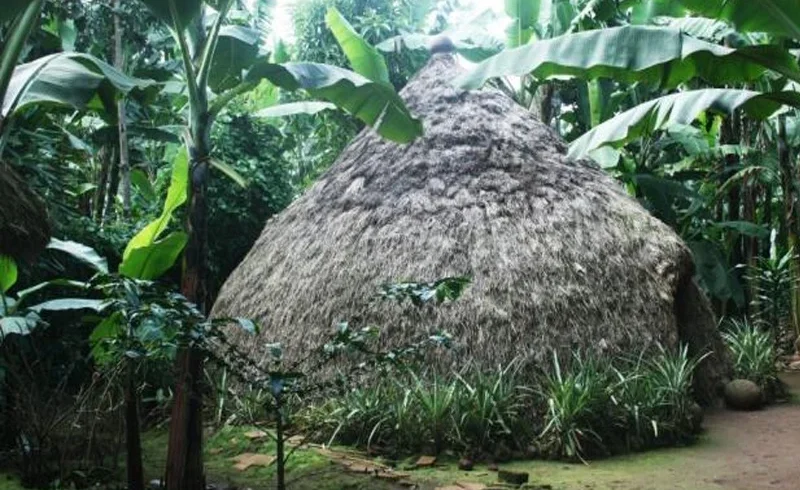
Trek through the western rainforest to Mti Mkubwa Camp. The western Lemosho approach begins through a quieter montane rainforest, where the path climbs steadily beneath a dense canopy. Recent rain can make mud and exposed roots part of the day’s challenge, so guides emphasize controlled footing and an easy pace. Because the route begins relatively low, this stage gives the body a gradual introduction before the larger gains on the Shira Plateau. Mti Mkubwa, or Big Tree Camp, is reached in the forest zone, where the evening focuses on food, warm layers, hydration and the first health check.
Climb through heath and moorland to Shira 1 Camp. The trail leaves dense forest and climbs into heath and moorland, where the western slopes of Kilimanjaro open dramatically. A sequence of ridges leads toward the edge of the Shira Plateau, with Kibo appearing ahead when cloud cover breaks. Altitude becomes more noticeable as the team approaches Shira 1 at roughly 3,500 m, so the guide encourages a slow rhythm and regular hydration. Once in camp, climbers rest, eat and prepare for the broader plateau crossing ahead.
Move gradually across the Shira Plateau, then take a controlled acclimatization walk before returning to camp. The team moves gradually across the broad Shira Plateau, using the day as much for acclimatization as for distance. Open volcanic terrain gives wide views of Kibo and the remains of the ancient Shira caldera when weather allows. The gentler profile is useful for reinforcing the slow walking rhythm needed higher on the mountain. If the itinerary includes an acclimatization extension, the guide may lead a controlled walk to a slightly higher point before returning to sleep lower. The evening is spent eating, hydrating and preparing for the next stage.
Traverse the upper Shira landscape toward Moir Hut for a quieter high-altitude night. The route crosses the upper Shira landscape and angles toward the quieter Moir sector on Kilimanjaro’s northwestern side. The terrain is open, dry and volcanic, with fewer groups once the trail leaves the busier southern-circuit line. The gradual traverse gives the guide time to maintain a conservative pace as altitude rises above the main Shira camps. A short acclimatization walk may be added after arrival if everyone is strong. The remote setting and higher sleeping elevation make hydration, warm clothing and early rest especially important.
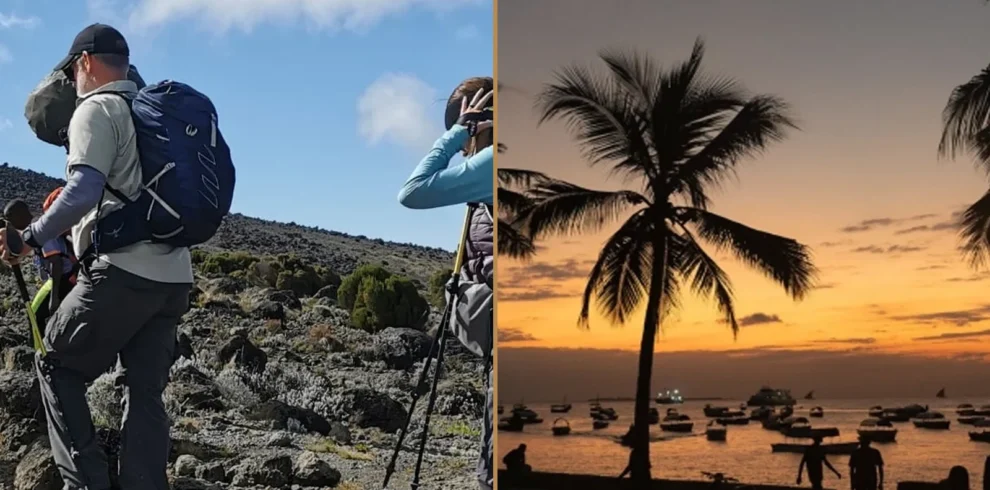
Continue toward Lava Tower and then descend to Barranco Camp. This is an important acclimatization stage. The route climbs toward Lava Tower at roughly 4,600 m, giving the body useful exposure to higher altitude before descending again. The guide keeps the pace deliberate and monitors headache, appetite, breathing and energy as the group gains height. Time at the high point is adjusted according to weather and individual condition. Descending to a lower sleeping area supports the climb-high, sleep-lower strategy and usually makes the evening feel more comfortable than the high point of the day.
Climb the Barranco Wall and traverse to Karanga Camp. The day includes the Barranco Wall, a steep hands-on scramble rather than technical rock climbing. Guides manage spacing carefully through narrow sections and exposed-looking steps before the route opens onto the southern slopes. From the top, the trail crosses a sequence of valleys and ridges with dramatic views of Kibo and the southern glaciers when weather is clear. Karanga is an important recovery point before the summit approach, so the afternoon focuses on food, hydration, warm layers and another health assessment.
Reach Barafu Camp and prepare for summit night. Leaving the Karanga sector, the route climbs into a much drier alpine-desert environment where vegetation almost disappears. The higher the team moves, the more important a slow pace becomes, even when the distance is not great. Barafu is the main summit base on the southern routes, so arrival is focused on eating, drinking, preparing headlamps and insulated clothing, and resting. The guide reviews the summit plan, expected temperatures, turnaround rules and each climber’s condition before the overnight ascent.
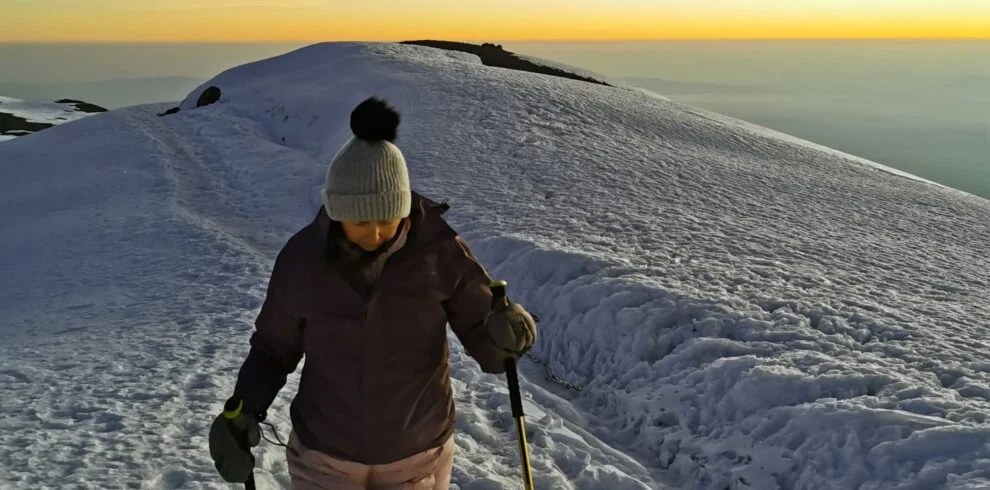
Attempt Uhuru Peak overnight and descend to Mweka Camp. The summit attempt normally begins late at night or around midnight. Headlamps mark a slow line up steep volcanic terrain toward the crater rim before the final approach to Uhuru Peak at 5,895 m. Reaching the summit depends on weather, pace and individual altitude response, and the lead guide can order a turnaround at any stage. After a brief summit stop, the team descends back through the high camp and continues much lower for recovery. The combination of ascent and long descent makes this the most physically and mentally demanding day of the expedition.
Descend to Mweka Gate and transfer to Arusha. The final descent returns to richer vegetation as the trail drops into Kilimanjaro’s montane rainforest. Breathing usually becomes easier as altitude falls, but tired legs, roots and slippery ground still require concentration. The team stays together to Mweka Gate, where park exit procedures are completed and the mountain portion of the trip officially ends. After meeting the transfer vehicle, guests can change into dry travel clothes and return to Arusha or continue with a pre-arranged safari or Zanzibar extension.