Visibility
Cloud can build quickly even after a clear start, so views should be treated as a bonus rather than a promise.

Mount Meru can be climbed in different parts of the year, but rainfall, cloud, trail grip, visibility and summit-ridge comfort change with the season. The most practical choice is to match your dates to the conditions you are comfortable handling rather than search for a single guaranteed “perfect” month.
Northern Tanzania generally has two drier periods: January to February and June through October. March to May brings the broad long-rains period, while November and parts of December can be more variable with shorter rains. Mount Meru still creates local mountain weather, so a dry-season booking does not guarantee a dry trail or clear summit ridge.
January and February are often warmer around Arusha and the lower mountain. June through October is cooler and broadly drier, with crisp mornings and potentially colder upper-mountain conditions. Either window can work well when your clothing, pacing and itinerary match the mountain.


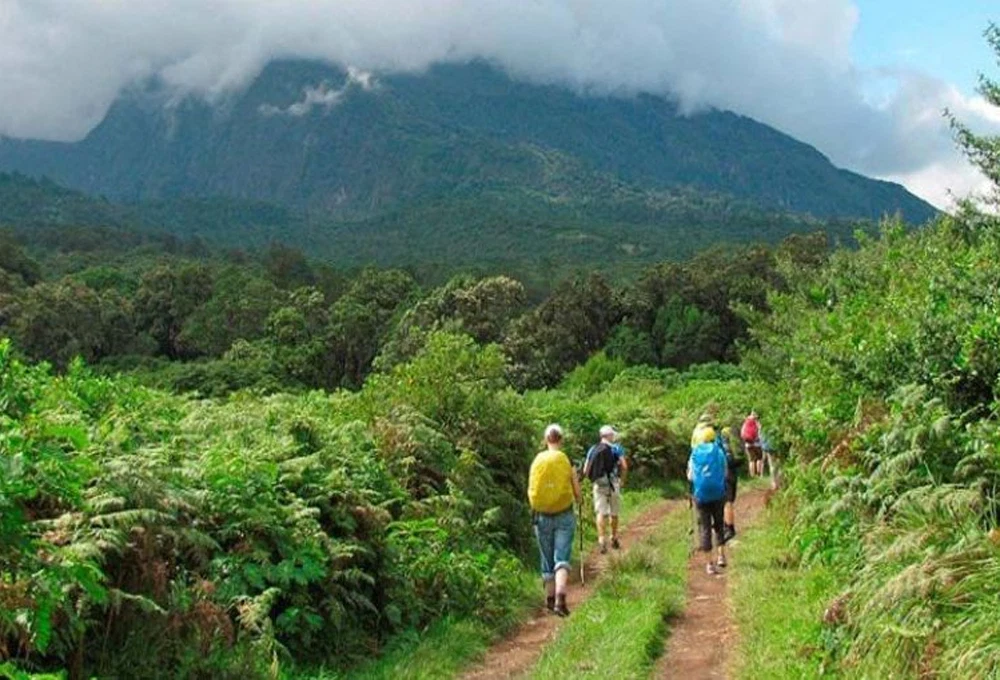
During wetter weeks the forest can be muddy, roots and rocks can be slippery, cloud can sit lower on the mountain and keeping insulation dry becomes more important. The climb does not stop being possible simply because a month is wetter, but expectations, waterproofing and flexibility should change.
October often begins relatively dry before conditions become more variable. November commonly brings short rains in northern Tanzania, while December can vary from week to week. These months can suit flexible travellers, but the packing standard should remain fully mountain-ready.
Cloud can build quickly even after a clear start, so views should be treated as a bonus rather than a promise.
The forest and upper ridge may feel very different on the same day because elevation changes temperature, wind and moisture.
Meru is generally quieter than Kilimanjaro, but actual group numbers vary with holidays, operators and park demand.
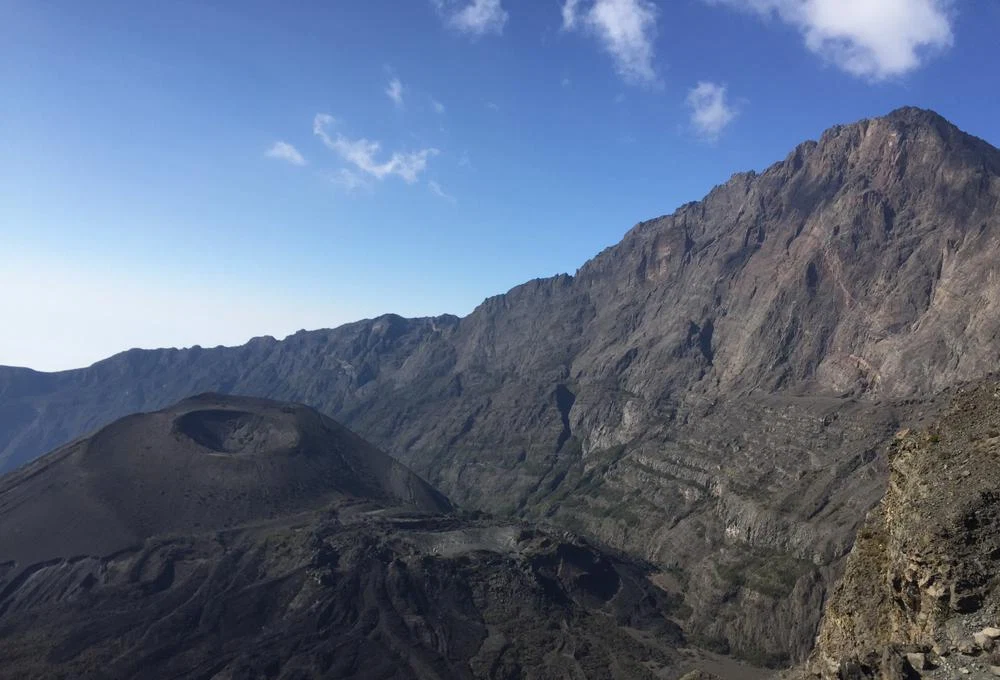
The upper mountain is exposed and significantly colder than Arusha. Summit departures happen in darkness, and wind can make the ridge feel much colder than lower-mountain temperatures suggest. Pack for a cold pre-dawn climb regardless of the month on your ticket.

This practical summary describes broad northern Tanzania patterns. Mountain conditions can vary within a month and from one elevation zone to another.
| Month | Typical planning picture | What to prepare for |
|---|---|---|
| January | Often comparatively dry and warmer low down | Sun protection, rain shell and full summit layers |
| February | Often comparatively dry; popular early-year window | Warm summit kit and normal rain protection |
| March | Transition toward longer rains | Increasing rain probability and muddy forest |
| April | Usually among the wetter months | Strong waterproofing and flexible expectations |
| May | Often wet early, sometimes easing later | Wet trail management and warm dry layers |
| June | Drying trend and cooler conditions | Cold mornings and exposed-ridge wind |
| July | Broad dry season | Cold summit departure and holiday demand |
| August | Broad dry season | Cold, dry dust lower down; summit wind |
| September | Broad dry season | Good all-round planning window, still variable |
| October | Often transition month | Warm days lower down, possible rain return |
| November | Common short-rains period | Frequent waterproofing and variable visibility |
| December | Variable; festive travel demand | Flexible weather expectations and early booking |
A three-day summit climb compresses the route more tightly, while four days allow a more gradual sequence and additional time around Saddle Hut and acclimatisation activities. TANAPA material recommends four days for Mount Meru summit itineraries to allow acclimatisation. Your travel window should therefore account for both seasonal conditions and enough mountain days.
Useful when time is limited, but the climb is more compressed and leaves less margin for recovery.
Gives a more gradual mountain rhythm and is commonly used for acclimatisation-focused itineraries.
Arriving in Arusha before the climb gives time for briefing, equipment checks and delayed luggage recovery.
Mount Meru rises inside Arusha National Park, where the lower route passes through forest and open habitat before the mountain becomes more alpine. Wildlife sightings are possible but never guaranteed. Season can change vegetation density, trail moisture and visibility, so the lower mountain deserves the same planning attention as summit night.
If your flights are fixed, the useful question is not “Is this the perfect month?” but “What itinerary, equipment and expectations make sense for these dates?” If your dates are flexible, compare the drier windows first, then decide whether you value warmer lower-mountain conditions, cooler mid-year weather or quieter shoulder travel.

Straight answers about drier windows, rains, summit conditions and choosing dates without promising weather that the mountain cannot guarantee.
Move between timing, difficulty, packing, preparation, route options and Tanzania extensions without losing the context of your climb.
Everyday Safaris is a Tanzania-based ground team supporting private travellers, groups, clubs and international travel partners with Mount Meru, Kilimanjaro and safari planning.