Practical answers about training, hills, gear practice, acclimatisation and the final days before your climb.
01How long should I train for Mount Meru?+
Many recreational trekkers use an 8–12 week build-up, but the right period depends on your starting fitness. Consistency and gradual progression are more important than an exact number of weeks.
02What type of training is best?+
Hilly walking or hiking is the most specific. Combine it with steady aerobic work and simple leg/core strength so you can climb for several hours and recover for the next day.
03Do I need to run?+
No. Running can help aerobic fitness if you already enjoy it, but it is not required. Long uphill walking, stairs or incline training are more specific to the movement you will use on Meru.
04Should I train with a backpack?+
Yes. Build up gradually to a realistic daypack load and use the same pack during longer walks so you can adjust the fit before Tanzania.
05How can I prepare for altitude?+
Fitness training does not create full high-altitude acclimatisation at sea level. Choose a sensible itinerary, ascend slowly, hydrate, eat and report symptoms early. The four-day format provides more acclimatisation time than three days.
06Is Little Meru useful for acclimatisation?+
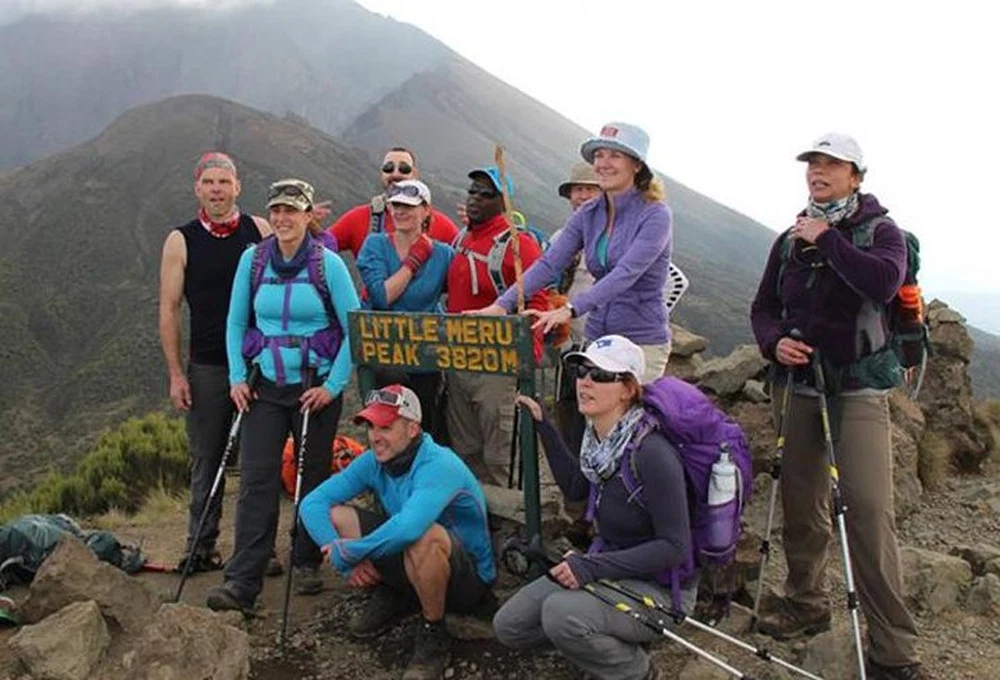
On four-day itineraries, an acclimatisation walk around Saddle Hut and Little Meru can add useful time at elevation before the main summit departure. The exact plan depends on conditions and the guide.
07What should I do in the final week?+
Reduce training volume, sleep well, keep moving lightly and complete gear/travel checks. Avoid trying to compensate for missed training with hard last-minute sessions.
08How do I prepare if I live somewhere flat?+
Use stairs, treadmill incline, step-ups and longer walks. You can build the muscular and aerobic demands even without mountains, then rely on the itinerary for actual altitude acclimatisation.
09Should I see a doctor before climbing?+
If you have medical conditions, take prescription medication, are pregnant, or have concerns about exercising at altitude, discuss the trip with a qualified clinician who knows your history.
10Is Mount Meru good preparation before Kilimanjaro?+
It can provide recent experience with trekking, altitude, cold mornings and multi-day mountain routines. It does not guarantee Kilimanjaro acclimatisation or summit success, so Kilimanjaro still needs an appropriate route and duration.