Meru
Shorter overall trip, fast transition from park terrain to a high volcanic ridge.

Mount Meru and Kilimanjaro are close enough to fit into one northern Tanzania journey, but they are not smaller and larger versions of the same trek. They differ in altitude, duration, accommodation, trail atmosphere and the character of the summit experience.
Use this comparison to understand the structure of each climb. It is descriptive rather than a declaration that one mountain is “better.”
| Factor | Mount Meru | Mount Kilimanjaro |
|---|---|---|
| Highest point | Socialist Peak, about 4,566 m | Uhuru Peak, 5,895 m |
| Typical summit itinerary | 3–4 days | Usually 5–9 days depending on route |
| Primary route | Momella Route | Several established routes |
| Accommodation | Mountain huts | Marangu uses huts; most other routes use tents |
| Lower environment | Arusha National Park with wildlife habitat | Distinct ecological zones around Kilimanjaro National Park |
| Upper terrain | Narrow volcanic crater ridge in places | Broad high-altitude approaches; route-specific summit terrain |
| Main altitude challenge | Rapid gain on a shorter itinerary | Higher maximum altitude and more total high-altitude exposure |
Kilimanjaro reaches 5,895 m, while Mount Meru is about 4,566 m. Meru is therefore lower, but most summit itineraries are only three or four days. Kilimanjaro routes usually allow more days on the mountain because the final altitude is substantially higher.
Shorter overall trip, fast transition from park terrain to a high volcanic ridge.
Longer itineraries with multiple route profiles and a much higher final summit.
Require conservative pacing, hydration, warm clothing and willingness to turn around when safety demands it.

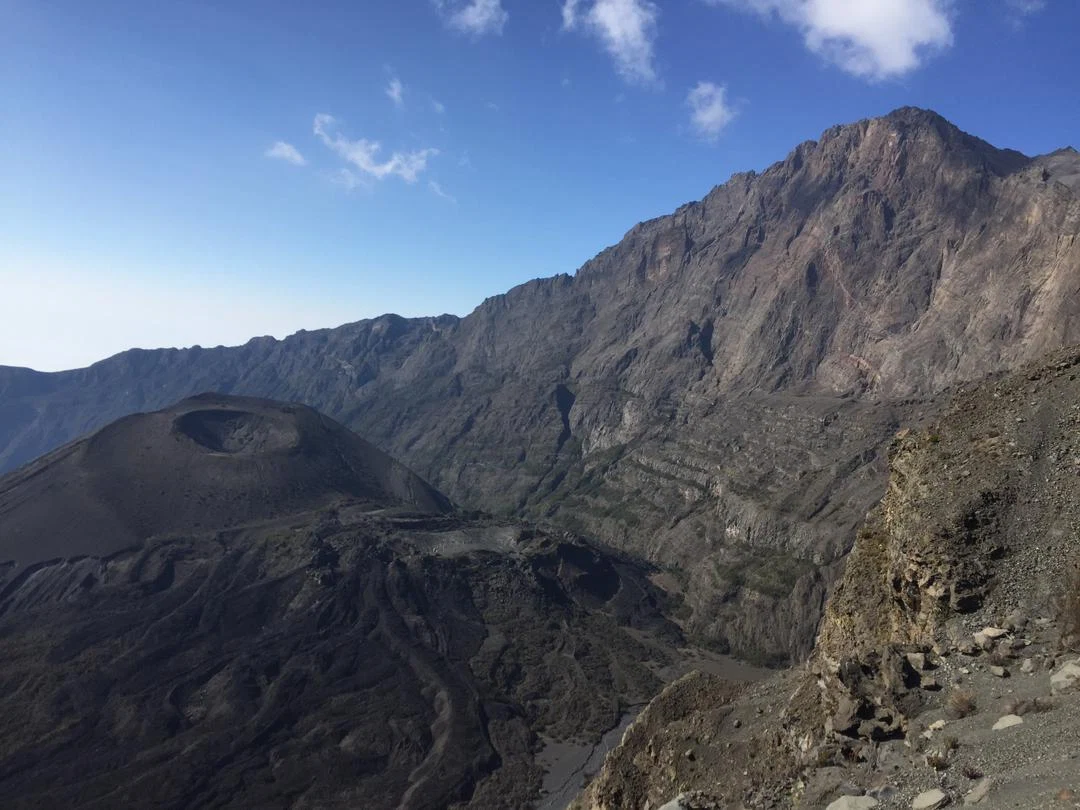
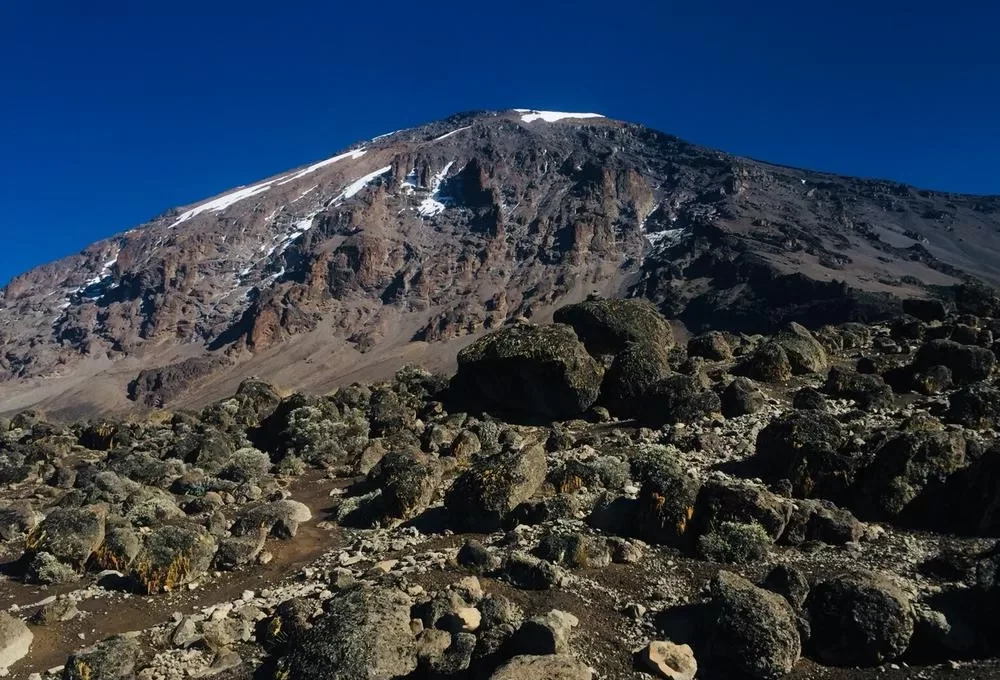
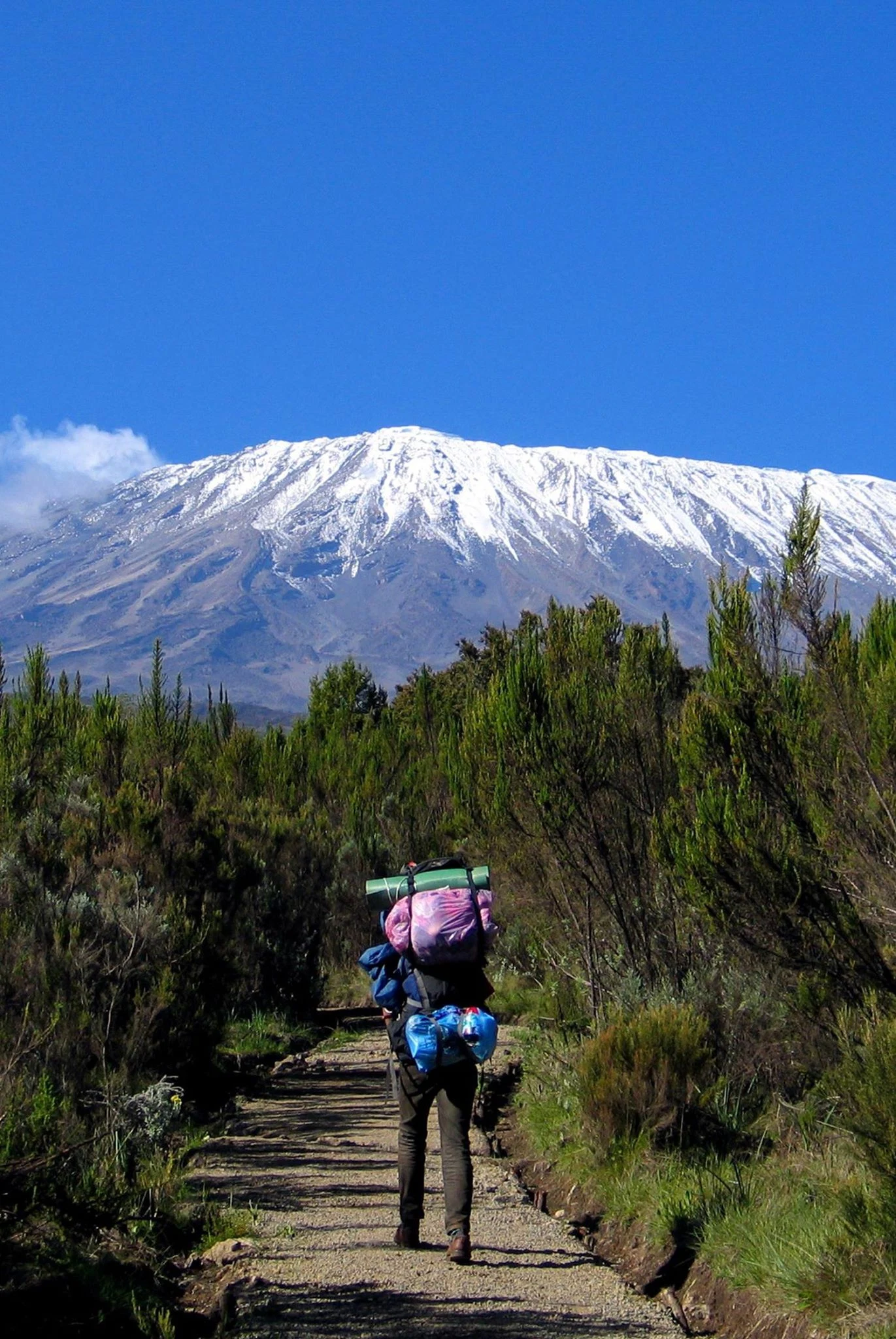
Meru’s broken caldera, ash cone, steep inner wall and ridge are visually central to the climb. TANAPA describes the mountain as a stratovolcano with major geological features shaped by collapse and eruption. Kilimanjaro offers a different scale, with multiple routes crossing forest, heath, moorland and alpine terrain toward Kibo.
Meru’s lower summit reduces the absolute altitude compared with Kilimanjaro, but the climb is still serious. Its upper crater rim can feel steep and exposed. Kilimanjaro’s defining difficulty is the much greater altitude and the need to manage several consecutive days before summit night.

Mount Meru summit climbs use Miriakamba and Saddle huts. On Kilimanjaro, Marangu is the hut route, while routes such as Machame, Lemosho, Rongai, Umbwe and the Northern Circuit use designated tented camps. This changes the packing, daily routine and atmosphere of the trip.
A more compact hut-to-hut rhythm on the main Momella Route.
The principal hut-based Kilimanjaro route.
Camping creates a different expedition routine and wider route choice.
Mount Meru receives fewer climbers overall and uses one main summit route. Kilimanjaro is a globally known objective with several routes and larger seasonal demand. Actual trail traffic changes by date, route and group departures, so “quiet” should be treated as a tendency rather than a guarantee.
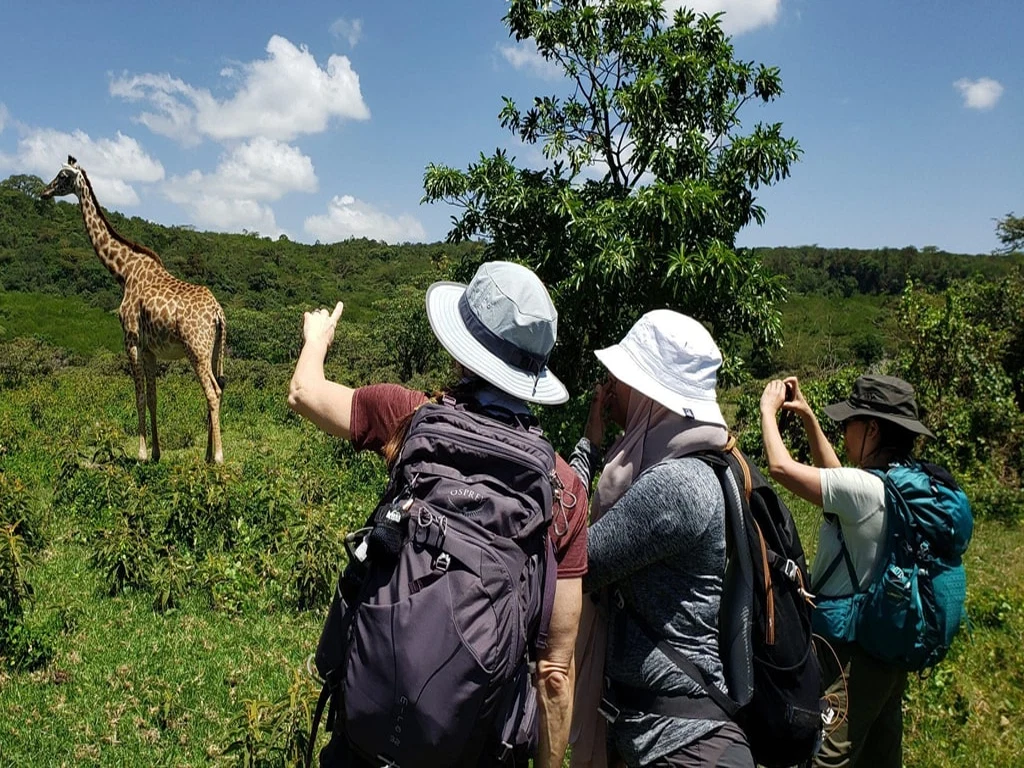
The Momella Route starts in Arusha National Park, where forest and open habitat can hold buffalo, giraffe, monkeys and other wildlife. Rangers and guides manage movement through the lower park. Kilimanjaro’s lower forest is rich in nature too, but the Meru climb more explicitly combines a national-park walking environment with the mountain route.

A recent Meru climb can give travellers practical experience with altitude, cold mornings, multi-day hiking and mountain routines before Kilimanjaro. Some itineraries therefore place Meru first, allow recovery, then begin Kilimanjaro. Your Kilimanjaro route should still be chosen for its own acclimatisation profile.
There is no universal winner. Meru fits a shorter mountain window and offers a strong Arusha National Park and volcanic-ridge experience. Kilimanjaro is the higher, longer objective with multiple route choices. Some travellers climb one; others combine both.
| If this matters most | Consider this planning direction | Why |
|---|---|---|
| 3–4 mountain days | Mount Meru | The standard summit programme fits a shorter window |
| Highest point in Africa | Kilimanjaro | Uhuru Peak is 5,895 m |
| Hut-based short trek | Mount Meru | Miriakamba and Saddle huts structure the climb |
| Multiple route choices | Kilimanjaro | Several routes offer different duration and scenery profiles |
| Pre-Kilimanjaro mountain experience | Meru before Kilimanjaro | Adds recent trekking and altitude exposure when scheduled responsibly |
| Wildlife + mountain in one compact route | Mount Meru | Lower trail sits inside Arusha National Park |

Clear comparisons of height, duration, difficulty, accommodation, wildlife context and combining both mountains in one Tanzania trip.
Move between timing, difficulty, packing, preparation, route options and Tanzania extensions without losing the context of your climb.
Everyday Safaris is a Tanzania-based ground team supporting private travellers, groups, clubs and international travel partners with Mount Meru, Kilimanjaro and safari planning.