
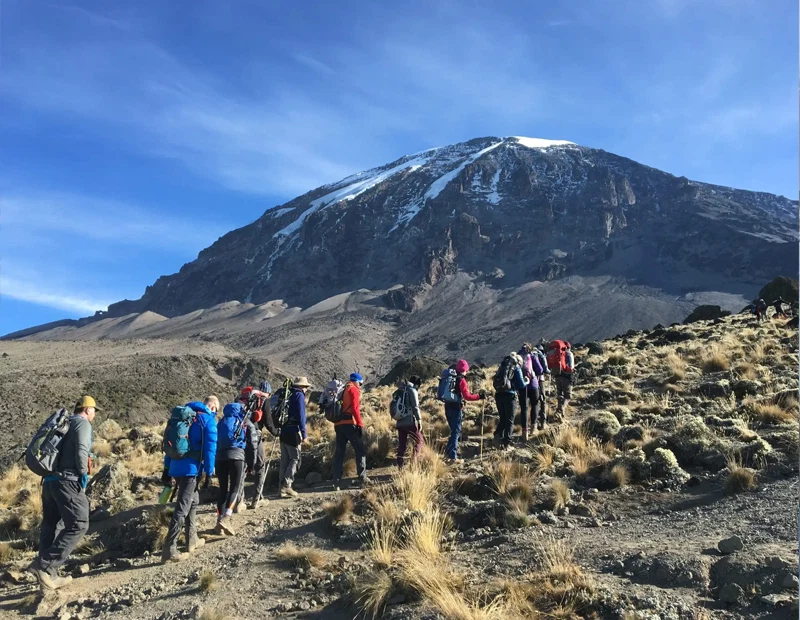
Kilimanjaro’s upper mountain is a volcanic landscape of crater rim, ash, rock and remaining ice fields. The summit experience is therefore more than standing beside the Uhuru Peak sign.
Glaciers and ice formations can appear close in clear weather, but visibility changes quickly with cloud, wind and the time of day.
Use this deep guide together with Stella Point Gilmans Point Uhuru Peak Guide · Kilimanjaro Summit Night Guide · Kilimanjaro safety · Kilimanjaro climbing guide · Kilimanjaro Marangu Route · Kilimanjaro Lemosho Route · contact Everyday Safaris. Those pages cover the broader route and safety structure, while this article focuses on the narrower search intent around Kilimanjaro glaciers crater rim.
Kilimanjaro Is a Volcano, Not Just a Peak
Kilimanjaro’s upper mountain is a volcanic landscape of crater rim, ash, rock and remaining ice fields. The summit experience is therefore more than standing beside the Uhuru Peak sign.
Glaciers and ice formations can appear close in clear weather, but visibility changes quickly with cloud, wind and the time of day.
For the wider trip context, compare this section with Stella Point Gilmans Point Uhuru Peak Guide. It helps place the detail inside the full mountain itinerary instead of treating one camp, landmark or equipment decision as if it existed on its own.
Before travel, also review Kilimanjaro climbing guide and the final Everyday Safaris quotation so route duration, transport, crew support and what is included are clear.
What the Crater Rim Actually Is
Climbers reach the rim at different landmarks depending on route, then follow high ground toward Uhuru Peak when health and conditions permit.
The visual contrast between dark volcanic ground, pale ice and sunrise is one reason summit photographs look so different from lower mountain images.
For the wider trip context, compare this section with Kilimanjaro Summit Night Guide. It helps place the detail inside the full mountain itinerary instead of treating one camp, landmark or equipment decision as if it existed on its own.
Before travel, also review Kilimanjaro Marangu Route and the final Everyday Safaris quotation so route duration, transport, crew support and what is included are clear.
Where Glaciers Enter the Summit View
Glaciers and ice formations can appear close in clear weather, but visibility changes quickly with cloud, wind and the time of day.
At nearly 5,900 metres, climbers do not have unlimited time to study the landscape. The guide controls how long the group remains high before beginning descent.
For the wider trip context, compare this section with Kilimanjaro safety. It helps place the detail inside the full mountain itinerary instead of treating one camp, landmark or equipment decision as if it existed on its own.
Before travel, also review Kilimanjaro Lemosho Route and the final Everyday Safaris quotation so route duration, transport, crew support and what is included are clear.
Why Light and Weather Change the Landscape
The visual contrast between dark volcanic ground, pale ice and sunrise is one reason summit photographs look so different from lower mountain images.
The high mountain should be treated with the same leave-no-trace discipline as lower camps. Photographs are important, but safety and environmental care take priority.
For the wider trip context, compare this section with Kilimanjaro climbing guide. It helps place the detail inside the full mountain itinerary instead of treating one camp, landmark or equipment decision as if it existed on its own.
Before travel, also review contact Everyday Safaris and the final Everyday Safaris quotation so route duration, transport, crew support and what is included are clear.
How the Final Traverse Feels at Altitude
At nearly 5,900 metres, climbers do not have unlimited time to study the landscape. The guide controls how long the group remains high before beginning descent.
Kilimanjaro’s upper mountain is a volcanic landscape of crater rim, ash, rock and remaining ice fields. The summit experience is therefore more than standing beside the Uhuru Peak sign.
For the wider trip context, compare this section with Kilimanjaro Marangu Route. It helps place the detail inside the full mountain itinerary instead of treating one camp, landmark or equipment decision as if it existed on its own.
Before travel, also review Stella Point Gilmans Point Uhuru Peak Guide and the final Everyday Safaris quotation so route duration, transport, crew support and what is included are clear.
Responsible Behaviour Near Fragile High-Altitude Terrain
The high mountain should be treated with the same leave-no-trace discipline as lower camps. Photographs are important, but safety and environmental care take priority.
Climbers reach the rim at different landmarks depending on route, then follow high ground toward Uhuru Peak when health and conditions permit.
For the wider trip context, compare this section with Kilimanjaro Lemosho Route. It helps place the detail inside the full mountain itinerary instead of treating one camp, landmark or equipment decision as if it existed on its own.
Before travel, also review Kilimanjaro Summit Night Guide and the final Everyday Safaris quotation so route duration, transport, crew support and what is included are clear.
Kilimanjaro glaciers crater rim: Planning Table
| Planning factor | What it means |
|---|---|
| Primary concern | Kilimanjaro’s upper mountain is a volcanic landscape of crater rim, ash, rock and remaining ice fields. The summit experience is therefore more than standing beside the Uhuru Peak sign. |
| What changes in practice | Glaciers and ice formations can appear close in clear weather, but visibility changes quickly with cloud, wind and the time of day. |
| What the guide watches | At nearly 5,900 metres, climbers do not have unlimited time to study the landscape. The guide controls how long the group remains high before beginning descent. |
| What the traveller should prepare | The high mountain should be treated with the same leave-no-trace discipline as lower camps. Photographs are important, but safety and environmental care take priority. |
The mountain decides more than the schedule
The high mountain should be treated with the same leave-no-trace discipline as lower camps. Photographs are important, but safety and environmental care take priority. A responsible itinerary keeps enough flexibility for the guide to respond to altitude, weather, trail conditions, group strength and park procedures.
Detailed Mountain Notes
Kilimanjaro Summit Glaciers
Kilimanjaro’s upper mountain is a volcanic landscape of crater rim, ash, rock and remaining ice fields. The summit experience is therefore more than standing beside the Uhuru Peak sign.
This point matters because climbers often focus on the final summit while underestimating how small decisions earlier in the itinerary affect energy, comfort and safety. A strong plan makes the mountain easier to manage by removing avoidable problems before they become serious.
Kilimanjaro Crater Rim
Climbers reach the rim at different landmarks depending on route, then follow high ground toward Uhuru Peak when health and conditions permit.
This point matters because climbers often focus on the final summit while underestimating how small decisions earlier in the itinerary affect energy, comfort and safety. A strong plan makes the mountain easier to manage by removing avoidable problems before they become serious.
Uhuru Peak Ice Fields
Glaciers and ice formations can appear close in clear weather, but visibility changes quickly with cloud, wind and the time of day.
This point matters because climbers often focus on the final summit while underestimating how small decisions earlier in the itinerary affect energy, comfort and safety. A strong plan makes the mountain easier to manage by removing avoidable problems before they become serious.
Kilimanjaro Volcanic Landscape
The visual contrast between dark volcanic ground, pale ice and sunrise is one reason summit photographs look so different from lower mountain images.
This point matters because climbers often focus on the final summit while underestimating how small decisions earlier in the itinerary affect energy, comfort and safety. A strong plan makes the mountain easier to manage by removing avoidable problems before they become serious.
Kilimanjaro Summit Glaciers
At nearly 5,900 metres, climbers do not have unlimited time to study the landscape. The guide controls how long the group remains high before beginning descent.
This point matters because climbers often focus on the final summit while underestimating how small decisions earlier in the itinerary affect energy, comfort and safety. A strong plan makes the mountain easier to manage by removing avoidable problems before they become serious.
Kilimanjaro Crater Rim
The high mountain should be treated with the same leave-no-trace discipline as lower camps. Photographs are important, but safety and environmental care take priority.
This point matters because climbers often focus on the final summit while underestimating how small decisions earlier in the itinerary affect energy, comfort and safety. A strong plan makes the mountain easier to manage by removing avoidable problems before they become serious.
Practical Checklist
- Read the full itinerary for Kilimanjaro glaciers crater rim rather than relying on the headline alone.
- Check the daily altitude gain, sleeping location and expected walking sequence.
- Use broken-in footwear and test important clothing before Tanzania.
- Keep water, warm layers and rain protection accessible during the trekking day.
- Tell the guide early about headache, nausea, dizziness, unusual fatigue, blisters or equipment problems.
- Treat weather, wildlife and summit outcomes as conditions-dependent rather than guaranteed.
- Confirm inclusions, transfers and any rented equipment in the final written quotation.
- Leave enough recovery time if another mountain, safari or Zanzibar follows.
Plan your mountain climb with Everyday Safaris
Tell Everyday Safaris your travel dates, trekking background, preferred mountain, available days and whether you want to add a safari or Zanzibar. The team can match the route and pace to the actual trip rather than forcing a generic schedule.
Kilimanjaro glaciers crater rim FAQs
What is the most important thing to know about Kilimanjaro glaciers crater rim?
Kilimanjaro’s upper mountain is a volcanic landscape of crater rim, ash, rock and remaining ice fields. The summit experience is therefore more than standing beside the Uhuru Peak sign. The final answer still depends on the exact itinerary, season, group and current mountain conditions.
Is Kilimanjaro glaciers crater rim suitable for first-time climbers?
Climbers reach the rim at different landmarks depending on route, then follow high ground toward Uhuru Peak when health and conditions permit. The final answer still depends on the exact itinerary, season, group and current mountain conditions.
How does altitude affect Kilimanjaro glaciers crater rim?
Glaciers and ice formations can appear close in clear weather, but visibility changes quickly with cloud, wind and the time of day. The final answer still depends on the exact itinerary, season, group and current mountain conditions.
What equipment matters most for Kilimanjaro glaciers crater rim?
The visual contrast between dark volcanic ground, pale ice and sunrise is one reason summit photographs look so different from lower mountain images. The final answer still depends on the exact itinerary, season, group and current mountain conditions.
Can weather change the plan for Kilimanjaro glaciers crater rim?
Yes. Wind, rain, cloud, cold, trail condition and visibility can change pace, clothing, timing or the safe turnaround point. The guide’s decision on the mountain takes priority over the printed schedule.
How should I prepare for Kilimanjaro glaciers crater rim?
The high mountain should be treated with the same leave-no-trace discipline as lower camps. Photographs are important, but safety and environmental care take priority. The final answer still depends on the exact itinerary, season, group and current mountain conditions.
Which Everyday Safaris page should I read next?
Start with the main Kilimanjaro climbing guide, then read the route, preparation, packing and safety pages linked throughout this article.
Can this be combined with another Tanzania mountain or safari?
Yes, when the itinerary leaves enough time for recovery and transfers. Everyday Safaris can connect mountain climbing with Kilimanjaro, Mount Meru, safari or Zanzibar depending on the trip.
Does fitness guarantee success on Kilimanjaro?
No. Fitness helps with the physical work, but it does not guarantee acclimatisation, good weather or a summit. Altitude response and guide judgement remain important.
When should a guide change or stop the plan?
A guide may slow, change or stop the plan when health, altitude symptoms, weather, trail conditions, wildlife procedures or time make continuing unsafe.